Nutrition is multidimensional
We often sort food into “healthy” and “unhealthy,” but nutrition is inherently multidimensional. For example, only 51% of meals that are good for your cholesterol are also good for your blood pressure.
To see how often that happens, we scored 8,215 meals logged by Empirical Health members across three separate dimensions. The correlation between the dimensions was lower than expected.
Three dimensions of a healthy meal
Different health goals depend on different nutrients. We built a simple score for three popular goals, each one a ratio of a helpful nutrient to a harmful one:
- Cholesterol health: fiber relative to saturated fat.
- Blood pressure health: potassium relative to sodium. Potassium lowers blood pressure whereas sodium raises it.
- Glycemic health: fiber relative to sugar.
These aren’t the only dimensions, of course. Weight loss, protein adequacy, and micronutrients are alternative valid goals. But these are illustrative dimensions of health.
A good blood pressure meal says nothing about blood sugar
Here’s the central result. We plotted each pair of scores against each other for all 8,215 meals.
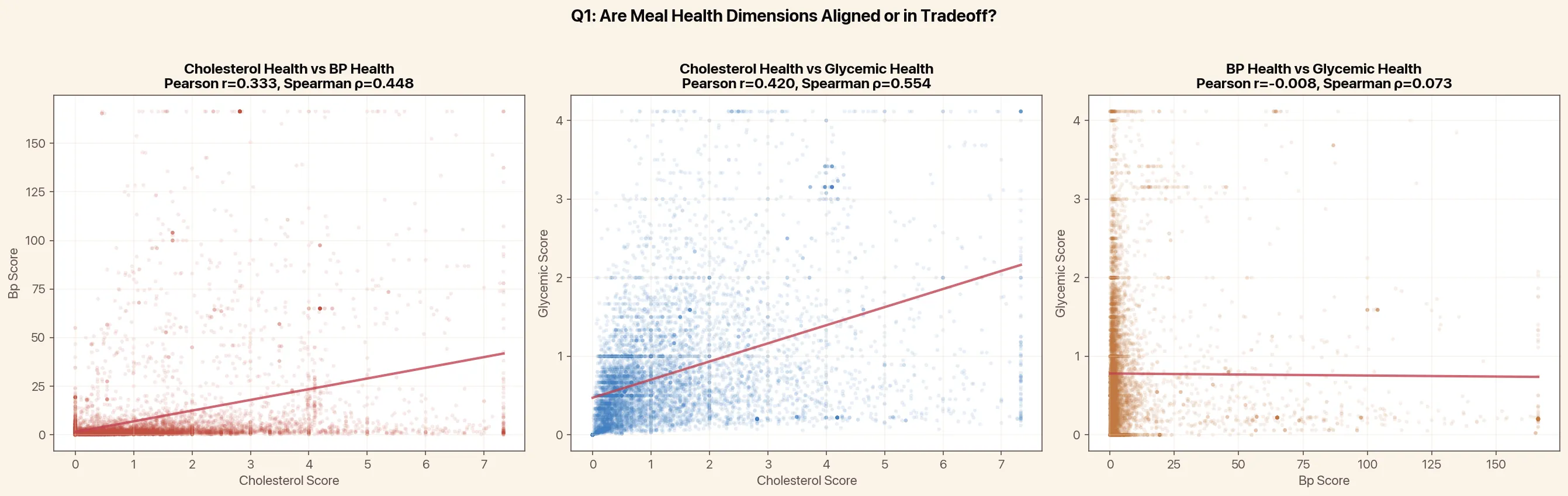
Cholesterol health and glycemic health move together somewhat (Pearson r=0.42), which makes sense since fiber helps both. Cholesterol and blood pressure are weakly related (r=0.33). But blood pressure health and glycemic health are essentially unrelated (r=-0.008). Knowing a meal is great for your blood pressure tells you nothing about whether it’s great for your blood sugar.
Put more concretely, if you take the top 25% of meals on each dimension, only 4.7% of meals land in the top quartile on all three at once. Most meals are good at something, and average at something else.
Why a single health score hides the tradeoffs
When nutrition gets compressed into one number for everyone, the disagreement between dimensions disappears. The overall health score in our data is driven mostly by fiber and potassium on the positive side, and saturated fat, sodium, and calories on the negative side.
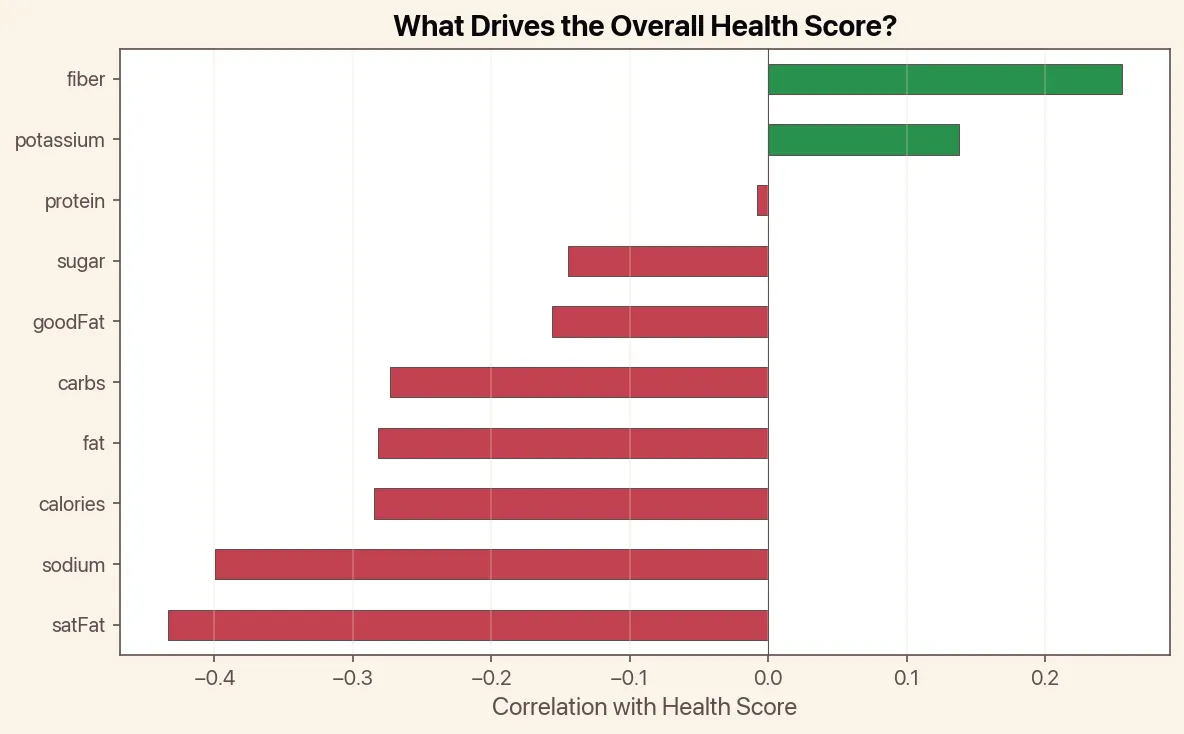
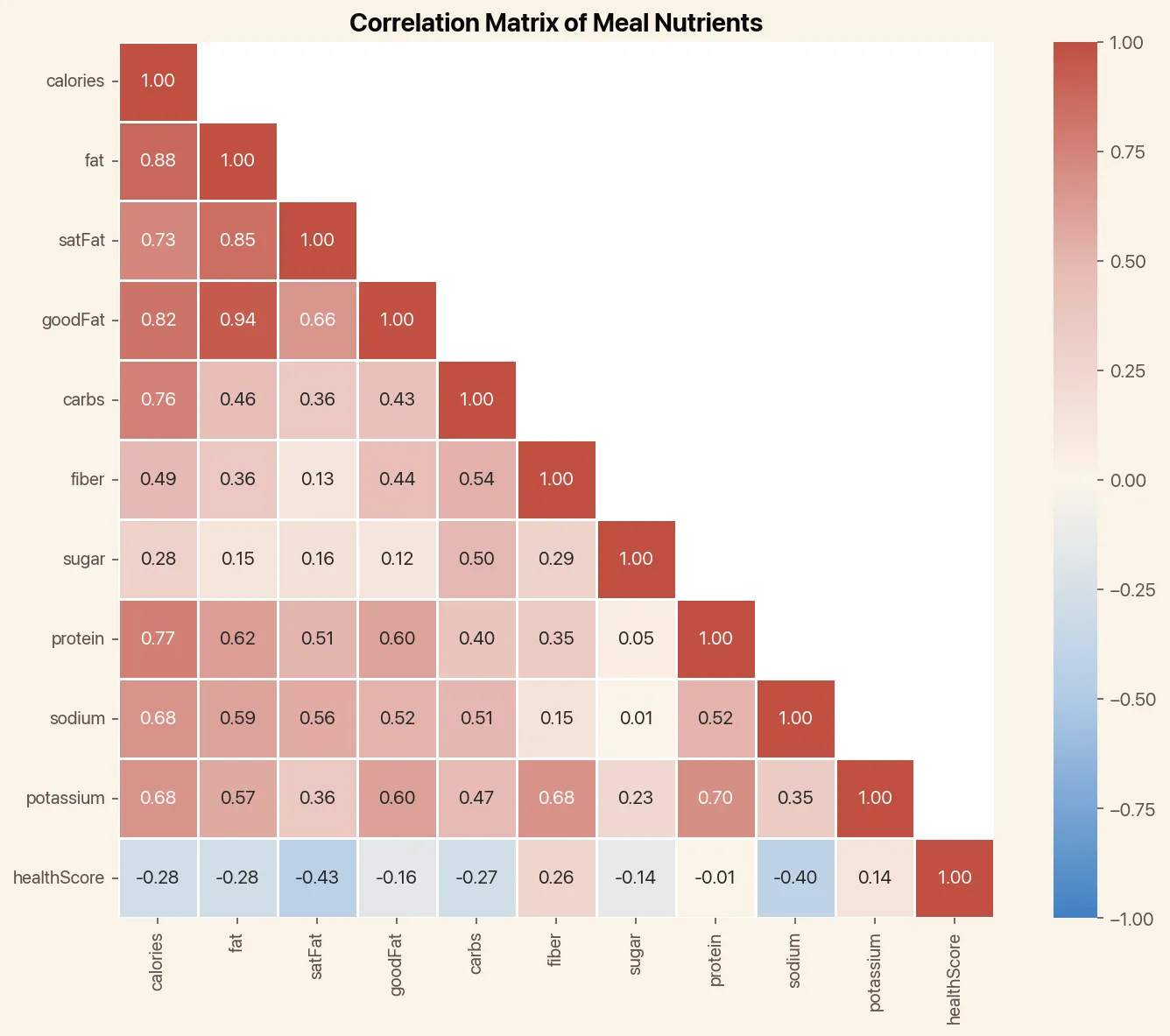
That’s a reasonable summary, but it’s still a weighted average. A salty meal rich in potassium and a sugary meal rich in fiber can earn the same overall score for completely different reasons. The nutrients themselves cluster in revealing ways: fiber and potassium track together, calories and fat track together, and sodium rides along with protein.
The practical takeaway is to match the definition of health to your goal. Empirical Health’s nutrition tracking breaks each meal into its components so you can see which dimension a food helps and which it doesn’t, instead of trusting one label to capture everything.
Get your free 30-day heart health guide
Evidence-based steps to optimize your heart health.