The government wants AI doctors. In 60 days, four new initiatives have launched:
- ARPA-H ADVOCATE: funding an autonomous AI cardiologist.
- CMS ACCESS: pays for outcomes, not visits, with reimbursement set that you have to use software to scale.
- FDA TEMPO: lets AI devices deploy before full clearance
- Utah: AI can prescribe medication (refills at first).
There are a lot of startups applying AI to medical operations: billing, prior auths, note taking, and so on.
But these change show AI is coming to care delivery. They’re payment models, regulatory pathways, R&D funding programs, and medical licensing frameworks. Taken together, they represent the most coordinated government push toward AI in medicine that we’ve seen.
Here’s what each of the four programs do, and why they matter.
There just aren’t enough human doctors
Before looking at the policy moves, it’s worth understanding the scale of the problem they’re trying to solve.
Primary care is physically impossible at current staffing levels. A 2023 study in the Journal of General Internal Medicine found that a primary care physician with a typical panel of 2,500 patients would need 27 hours per day to deliver all recommended preventive, chronic disease, and acute care. Even with a team-based care model (which currently is economically infeasible), the number only drops to 9.3 hours, leaving little room for documentation, inbox management, or lunch.
Specialist access is worse. A 2024 study in JACC found that 46% of U.S. counties have zero practicing cardiologists. In those counties, the average round-trip to the nearest cardiologist is 87 miles. Cardiovascular risk scores are 31% higher. Life expectancy is shorter by a full year.
The gap is widening. The AAMC projects a shortfall of 13,500 to 86,000 physicians by 2036, with primary care alone short by 20,000 to 40,000 doctors. Meanwhile, 42% of active physicians are over 55 and approaching retirement, and the population over 65 is growing 34% by 2036.
Millions already can’t get care. About 71 million Americans live in a primary care Health Professional Shortage Area. In 2024, 38% of Americans delayed or skipped care due to cost (up 41% over the prior year). Of those who put off care, 42% said their condition got worse. We’re not even talking about the latent demand for care: people who need medical attention but aren’t getting it, either because there’s no provider available or because the system is too expensive or inconvenient to navigate.
The standard response is to train more doctors. That takes a decade per physician. The math doesn’t work, so something else has to scale.
Four government initiatives that promote AI doctors
Let’s break down each initiative one by one.
CMS ACCESS: pay for outcomes, not office visits
On December 1, 2025, CMS announced ACCESS (Advancing Chronic Care with Effective, Scalable Solutions), a 10-year Medicare payment model starting July 2026.
The core idea is instead of billing per office visit, participating organizations receive a recurring Outcome-Aligned Payment for managing chronic conditions. Payment scales with whether patients actually get better — blood pressure comes down, cholsterol improves, HbA1c improves, depression scores drop. Patients owe zero copays.
ACCESS covers four clinical tracks: early cardiometabolic conditions (hypertension, dyslipidemia, prediabetes, obesity), established cardiometabolic disease (diabetes, CKD, atherosclerotic cardiovascular disease), musculoskeletal pain, and behavioral health (depression and anxiety). Two-thirds of Medicare members have at least one qualifying condition.
 Medicare has set ACCESS payment levels high enough to be interesting, but low enough that you have to scale with AI, not primarily human labor
ACCESS’s payments are set low enough, $200-$400, that organizations have to use AI. You can’t scale with just people.
ARPA-H ADVOCATE: fund an autonomous AI cardiologist
In January 2026, ARPA-H announced ADVOCATE (Agentic AI-Enabled Cardiovascular Care Transformation), a program to develop the first FDA-authorized autonomous AI system for cardiovascular care.
The stated goal: a 24/7 “clinician-extender” AI agent that can connect to patient health records, provide diet and exercise recommendations, write and modify prescriptions, support diagnoses, and schedule appointments — for heart failure and post-heart attack patients. A second AI agent would supervise the first for safety.
ARPA-H director Alicia Jackson described it as “democratizing healthcare access.” ADVOCATE program manager Haider Warraich (notably, the lead author on the 46%-of-counties-have-no-cardiologists study) called it “a clinician-extender — an autonomous agent understanding treatment needs.”
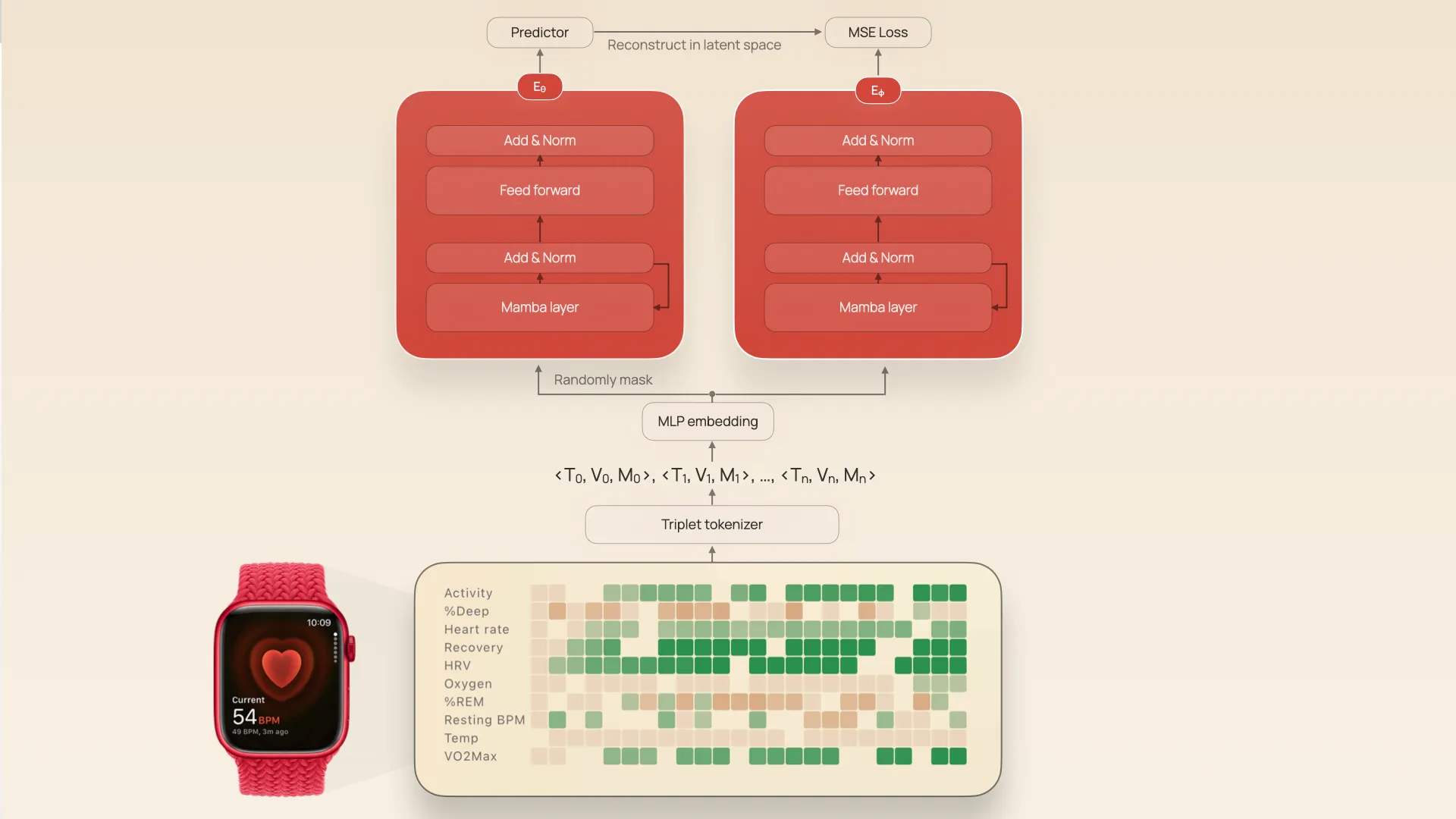 Foundation model for physiological data, including cardiovascular conditions like hypertension and atrial flutter.
We’ve done some early work here, training a foundation model for physiological data that learns to predict diagnoses such as hypertension, atrial flutter, and so on.
FDA TEMPO: temporary enforcement descretion for AI doctors
Four days after CMS announced ACCESS, the FDA launched TEMPO (Technology-Enabled Meaningful Patient Outcomes). This a pilot that allows digital health devices, including AI-enabled ones, to be deployed in clinical care before receiving full premarket authorization.
Under TEMPO, the FDA exercises enforcement discretion: selected manufacturers can deploy their devices in real-world clinical settings without a 510(k), De Novo, or PMA clearance. In exchange, manufacturers collect real-world data on safety and effectiveness, which can later support a full authorization submission.
The FDA expects to select up to 10 manufacturers per clinical area across four tracks that mirror the ACCESS model, potentially around 40 devices total. Statements of interest opened January 2, 2026.
AI medical devices have historically faced a chicken-and-egg problem. You need large-scale clinical data to get FDA clearance, but you can’t deploy at scale without clearance. TEMPO breaks the loop. It creates a path for AI tools to enter clinical practice, gather evidence, and iterate, rather than spending years in pre-market limbo.
The coordination between TEMPO and ACCESS is deliberate. CMS announced the payment model; four days later, the FDA announced the regulatory pathway. Together, they create something that didn’t exist before: a simultaneous on-ramp for AI-enabled healthcare — one that pays you to deploy it, and one that lets you deploy it before the traditional clearance process is complete.
4. Utah: give AI a medical license
On January 6, 2026, Utah became the first state to allow an AI system to legally participate in the practice of medicine.
Under the state’s AI Policy Act, Utah’s Department of Commerce granted a regulatory exemption to Doctronic, a technology company, allowing its AI platform to autonomously renew prescriptions for roughly 190 commonly used, non-controlled medications (including blood pressure drugs, statins, birth control, and SSRIs). The AI doctor evaluates patient history and clinical data, then approves the refill.
The pilot includes guardrails: the first 250 prescriptions in each medication class require human physician review. Controlled substances, injectables, and drugs requiring lab monitoring are excluded. The AI cannot diagnose new conditions or initiate new prescriptions, only renew existing ones.
But the precedent is significant. For the first time, a U.S. government entity has granted an AI system the authority to make clinical decisions (prescribing medication) that previously required a medical license.
The pilot runs for 12 months. Doctronic co-founder Adam Oskowitz framed the motivation bluntly: “Medication non-compliance drives $100 billion in avoidable annual medical expenses.”
What this adds up to: AI doctors
In isolation, any one of these moves would be notable. Together, they cover every lever the government has:
| Initiative | Entity | Lever |
|---|---|---|
| CMS ACCESS | CMS | Payment — pays for AI-enabled chronic care outcomes |
| FDA TEMPO | FDA | Regulation — lets AI devices deploy before full clearance |
| ARPA-H ADVOCATE | ARPA-H | R&D funding — builds autonomous clinical AI agents |
| Utah / Doctronic | State government | Licensing — grants AI authority to prescribe |
The throughline is straightforward: there are not enough doctors, the shortage is getting worse, and the government has decided that AI doctors are part of the solution. Not eventually. In the next couple of years.
Whether these specific programs succeed will be proven out over the next couple of years. But the direction is clear. The question for healthcare organizations is no longer whether AI will enter clinical care, but whether they’ll be ready when the payment models, regulatory pathways, and funding are all pointing the same way.
Get your free 30-day heart health guide
Evidence-based steps to optimize your heart health.