Vitamin D helps your body absorb calcium. You can get Vitamin D in three ways: sunlight, diet, and supplements. Recent studies indicate vitamin D can lower heart disease risk by half.
What does the vitamin D test measure?
The vitamin D test measures 25-hydroxyvitamin D, usually written 25-OH-D. This is the storage form that builds up in your blood from every source of vitamin D you have, whether it comes from sunlight on your skin, food, or a supplement bottle. The Endocrine Society recommends 25-OH-D as the standard assay because it captures total vitamin D status better than any other measurement.
Your result is a single number that adds together two forms. Vitamin D3 (cholecalciferol) is what your skin produces from sunlight and what you get from fatty fish, egg yolks, and other animal foods. Vitamin D2 (ergocalciferol) comes from plants, fungi, and most prescription supplements. Most labs report only the total, since both forms count toward your overall status.
A normal result is 30 to 100 ng/mL. Below 20 ng/mL is deficient. Between 20 and 30 ng/mL is insufficient. Most experts recommend aiming for at least 30 ng/mL, and some target 40 to 50 ng/mL for cardiovascular and bone protection.
Vitamin D deficiency symptoms
Most people with low vitamin D feel fine, which is exactly why testing matters. When symptoms do appear, they tend to be vague: fatigue that does not lift with sleep, bone or muscle aches, weakness in the legs, frequent colds, low mood, and slow wound healing. Hair thinning is sometimes noticed but rarely the only sign.
In children, severe deficiency can cause rickets and stunt growth. In adults, prolonged deficiency contributes to osteoporosis and raises the risk of fractures, which is why orthopedists routinely check vitamin D after a low-trauma break.
Who should get a vitamin D test?
About 40 percent of US adults are deficient, and most have no symptoms, so the honest answer is “almost everyone, at least once.” The case is stronger if you live north of San Francisco’s latitude, have darker skin, spend your day indoors, are over 60, or carry a higher BMI. Pregnancy, malabsorption (celiac, Crohn’s, gastric bypass), and a vegan diet also push the odds toward low. A typical pattern is to test once to learn your baseline, then retest seasonally if you are at risk or after starting a supplement to confirm it worked.
How the vitamin D blood test works
The test runs on a standard venous blood draw at one of 2,200+ Quest and Labcorp locations near you. You should fast for 8 to 12 hours before your appointment. Vitamin D itself does not require fasting, but the comprehensive panel includes lipids and glucose, which do. Water, black coffee, and most medications are fine during the fast.
Results come back in a few days, viewable in the Empirical Health app and reviewed by a physician. The test is available to adults 18 and over in all 50 states with no doctor’s visit or referral required, and it is HSA and FSA eligible.
Vitamin D test cost
A standalone vitamin D test runs $75 to $99 at most direct-to-consumer labs. Empirical’s vitamin D test is $190 and includes 99 other biomarkers (full lipid panel, ApoB, Lp(a), hs-CRP, HbA1c, thyroid, kidney, liver, CBC, electrolytes) in the same draw. That works out to less than $2 per biomarker, with a physician interpreting your results.
If you only want vitamin D and nothing else, a single-marker test from a standalone lab will be cheaper. If you are testing vitamin D because you care about your overall health, the panel is the better value.
How does Vitamin D change with age?
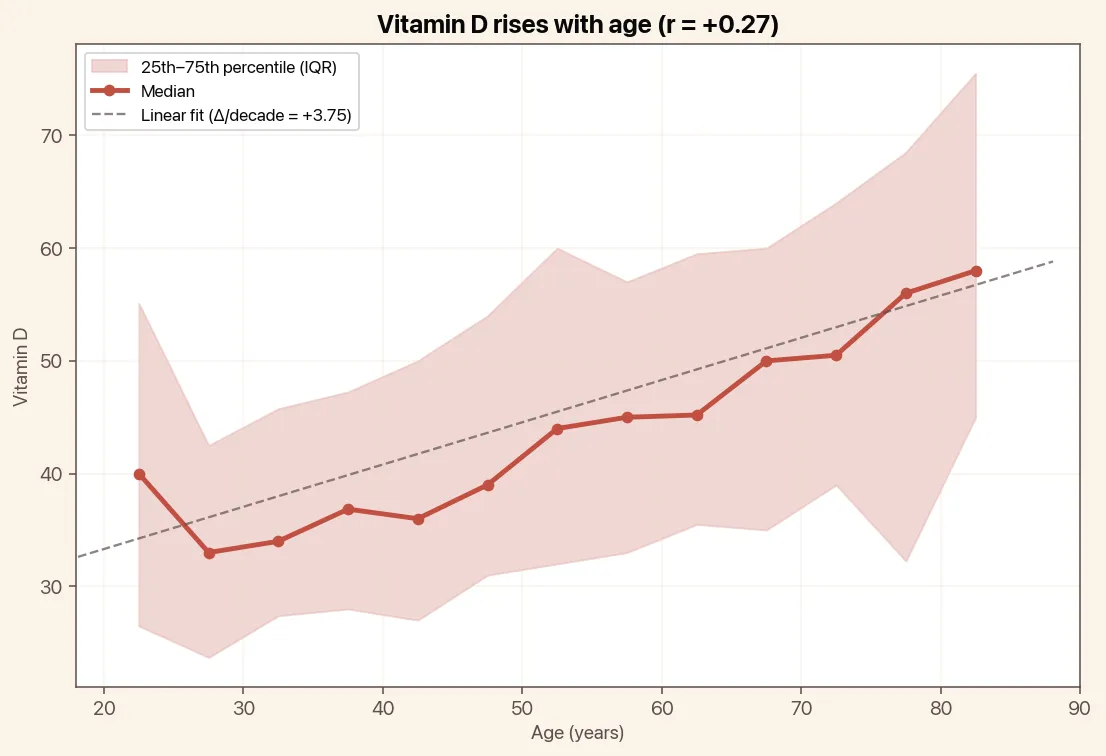
Vitamin D tends to rise with age (correlation with age, r = +0.27). The chart below shows the median by 5-year age bin and a linear trend line.