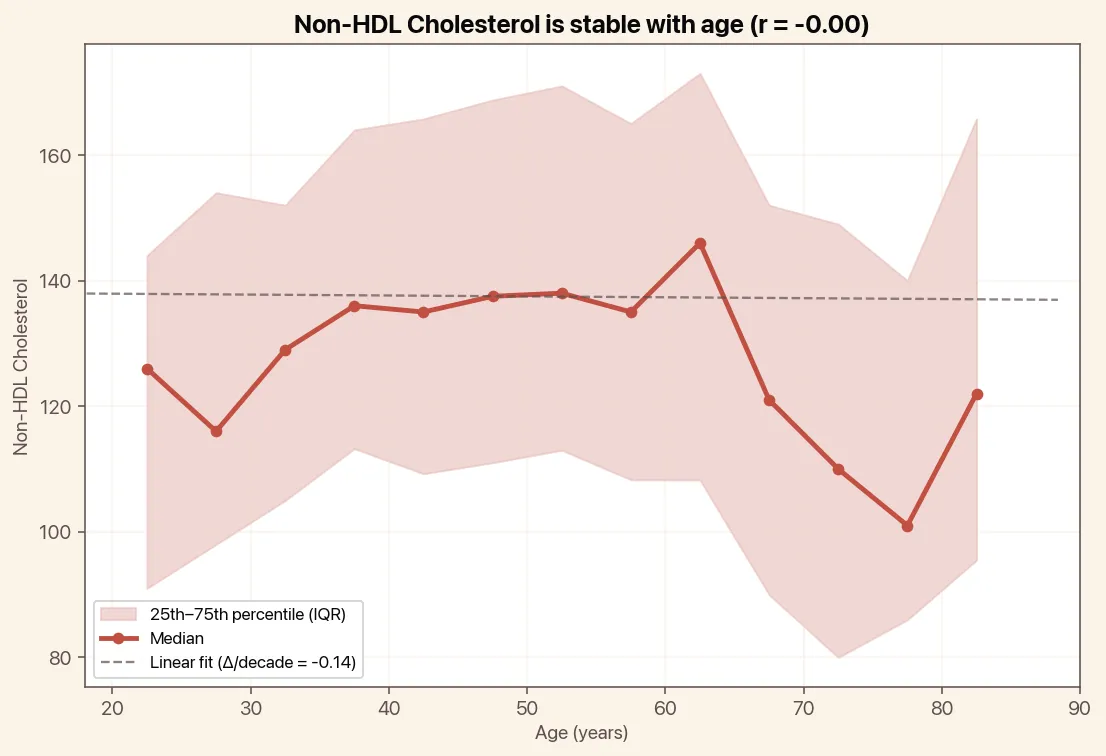
Normal range: 0 – 130 mg/dL (lower is better)
Non-HDL cholesterol equals total cholesterol minus HDL. It captures all atherogenic particles (LDL, VLDL, IDL, and Lp(a)) in a single value. Many cardiologists consider it a stronger predictor of cardiovascular risk than LDL alone because it includes triglyceride-rich particles that LDL misses. It is especially useful when triglycerides are elevated, since high triglycerides make LDL calculations less accurate.
A normal Non-HDL is 0 – 130 mg/dL. Lower is better.
The same factors that elevate LDL and triglycerides raise non-HDL: poor diet, obesity, insulin resistance, and genetics. Because non-HDL includes VLDL, high triglycerides from excess carbohydrate or alcohol intake will push non-HDL above target even if LDL looks acceptable.
The lifestyle changes that lower LDL and triglycerides both help here: reducing saturated fat, cutting back on refined carbs and alcohol, exercising regularly, and losing excess weight. Statins lower non-HDL effectively, and adding ezetimibe or a fibrate can provide additional benefit when triglycerides are a major contributor.
Non-HDL is most highly correlated with LDL Cholesterol and Total Cholesterol. Here are the top biomarkers correlated with Non-HDL, based on 500,000 tests done by Empirical Health.
The percentage shows how strongly two biomarkers move together. A higher number means the relationship is stronger. Green = rises and falls together. Orange = one rises as the other falls.
You can test your Non-HDL for $190 as part of Empirical's comprehensive health panel, which includes 100 biomarkers.
You can measure your Non-HDL for at 2,200+ testing locations across the US. Click below and enter your zip code to browse locations near you.
Test your Non-HDL Cholesterol and 100+ other biomarkers in a single blood draw.